Founder Log · HP Lesson 3
My 1st Big Win: I Stopped Talking and Let My Boss Close the Deal
Why persistence without strategy can slow down your sales cycle — and how executive engagement becomes your closing lever.
Founder Log · HP Lesson 3 by SignalLeading
Relationship is a 'nice to have' factor suggested in my sharing of Sales framework documents. My first win case, as well as several other deals that followed, were all new accounts to me.
This made sense at the time, as I was a junior salesperson with no existing network.
The first win case was a financial institution that required an online signing application to comply with legal requirements for their online trading service.
Back to My Framework
1. Requirements (including urgency) — Score: 2/3
There was a clear legal requirement and a strict deadline, unless they decided not to launch the online business at all. Their technical teams were already architecting the foundation.
2. Budget — Score: 2/3
Confirmed. The client had a budget specifically assigned to ensure the security and compliance of the system.
3. Competition — Score: 3/3
- Direct Competitors: A few mid-sized system integrators having a software development team in HK. However, they lacked the "Security DNA" we had from our university professors.
- Indirect Competitors: No viable non-software alternatives existed for this requirement.
Total Score: 7 out of 9. This was a clear GO signal.
The 9 Meetings
Everything started smoothly: requirement discovery, solution pitching, and customised proposals.
However, I felt that Relationship was the only factor I was missing. Therefore, I met with the client regularly almost once a week. Each time, I found a reasonable excuse to meet, such as a solution update that would help their project success.
With such a relationship-driven approach, we reached our 9th meeting, but the deal still hadn't closed.
The Turning Point
During our weekly review, my CEO asked how we could increase sales velocity. He asked why the deal was still drifting, considering the number of meetings I had conducted.
"Uh… I will push them," I said. I had used up all my "strategies" by that point.
"Amice, don't try to solve the problem all by yourself. Make use of the company resources, including ME," he continued. "Can I meet this client?"
He identified my weakness perfectly.
I had strong product knowledge, which many other salespeople lacked, and therefore I was so proud of it. I tried to win by proving "we had the best solution for you" and by building personal rapport.
But my whole strategy lacked the "Executive Trust" in front of our client.
Using Leverage
One of my three qualifiers is "Competition: the company-to-company relationship." I realised I shouldn't just ask my CEO to join a meeting. Instead, I needed to use him as leverage to reach the real decision-maker: the CTO.
I planned for the 10th meeting with two strict rules:
- Ensure all the groundwork: I confirmed my direct contact was satisfied with our solution and agreed it was the right time to move forward. (Think: if the project didn't launch, his role as system manager would be at risk.)
- Never surprise your boss: Before the meeting, I briefed my CEO on every detail so he could strategise his dialogue for the meeting.
I didn't want him to sell the solution. I wanted him to sell the company's commitment. I "used" my boss as a strategic closing tool to provide that final layer of credibility.
The Results: We Won
I thought I would be nervous in a high-level meeting, but I wasn't. I knew I had done my best. This 10th meeting was my CEO's showtime. I watched and learned as two senior executives turned abstract ideas into actionable items.
We got a verbal commitment of the business from the CTO in that meeting, followed shortly by a signed contract. It was my first significant enterprise victory.
Reflection: Were 10 Meetings Too Many?
Looking back, I ask myself: Could I have won it in 5 meetings?
- My inefficiency: I am a hardworking salesperson, but I spent too much time trying to be the "Expert" instead of the "Orchestrator."
- The Decision Gap: I didn't have a system — a "Gap Analysis" — to keep me sane and tell me when to bring in the right resource, which is executive support in this case. I relied purely on gut feeling.
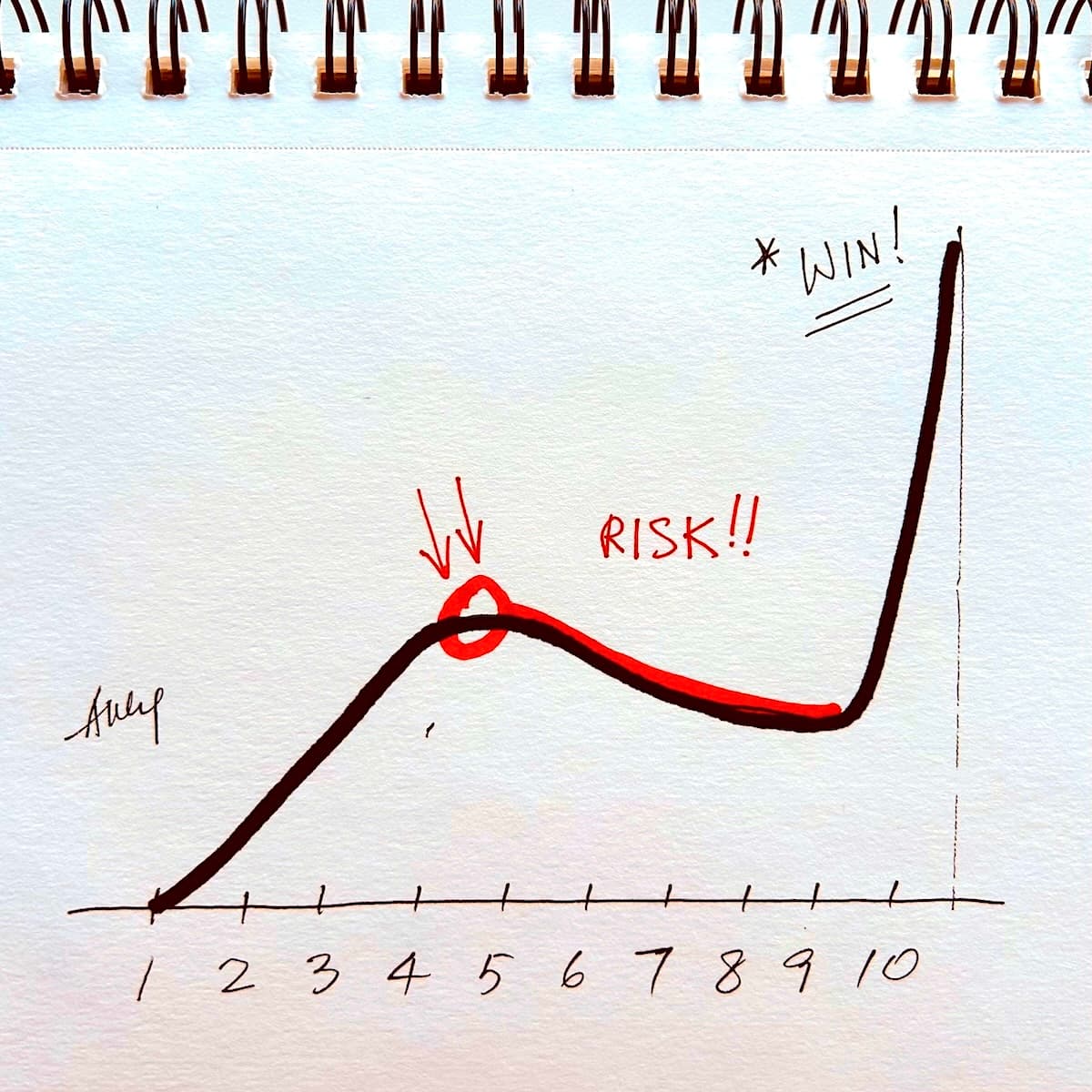
If I had a Sales OS back then, I would have seen the "Momentum Score" drop after the 4th meeting and triggered the "CEO Escalation" much earlier. That would have shortened the sales cycle by several weeks and, more importantly, eliminated the risk of the deal going cold and being lost.
Amice's Key Takeaways
The Decision Gap
Momentum Analysis
Persistence can help win a sale, but without a strategy, it can also spoil one.
"Selling Smarter" means measuring our Decision Quality at every step. Sometimes, the best move is to stop talking and let your boss close the deal.
Follow My Journey
I am going to share more from my 20 years of enterprise sales experience, as well as the sales methodologies — the science of selling.
Please follow my journey here at signalleading.com and on LinkedIn / Amice Wong.