Beating Silence Trap · #2 Fear of Starting Project
Beating the Silence Trap — Reason #2: Fear to Start the Project
Believe it or not, even when a client understands the value of your solution, or even if they were the ones who reached out to you, they often stall. They get overwhelmed and overthink the effort required for an implementation.
The result? They delay the process to avoid the work.
They tell themselves, "I'm just waiting for more options. I'm not the one delaying this."
Or, after you have sent all your materials and held the discovery calls, they reply: "Thanks for the information. We understand the benefits, but we aren't ready yet."
It is not the classic "polite no." That is actually a "fear of starting."
This is the Fear of Starting.
That comes to the second reason contributing to the silence trap of prospects in enterprise sales.
- Clients have too many options
- Clients' fear of starting a project ← This article
- (coming soon)
- (coming soon)
- (coming soon)
What's in This Article
Your roadmap before the read
-
4 drivers of fear — why clients stall even when they want your solution
-
(A) About the Client — pain level, past experience, KPI and company culture
-
(B) About You: Proposal Architecture — quantify value, detail implementation, de-risk the start
-
How SignalLeading automates the win — the systemic advantage and Win-Pattern Engine
Silence Reason #2: Fear of Starting the Project
While Reason #1 is about the "Paradox of Choice," Reason #2 is about the prospect's internal friction. Why would a client who wants your solution still be afraid to start?
I've broken this down into four core drivers of fear of starting the project:
1. Overwhelmed by Complexity
This isn't about having too many options; it's about the project itself. In an ICT project, for example, a Secure Database solution, the client is not just thinking about the software. They are thinking: "What do I have to prepare to back up everything? Test-bed setup? The migration plan? What if the decryption fails? Will this overhead slow down my entire system? Will users complain?"
An average rep sees the project as a solution you sell every day. But they see the project as almost a new life to adapt to.
2. Stakeholder Friction
A "Silent Trap" often happens because the prospect is overwhelmed by the number of stakeholders they need to align with. They get paralyzed by the internal politics, go quiet, and you lose the momentum.
3. Fear of Failure
Research from Geneca shows that 73% of projects are perceived as "doomed from the start." Your prospect might be worried about their own capability, their internal influence, or a bad experience they had with a previous vendor. A typical "Never start, never fail" mindset.
4. Chronic Procrastination (Laziness)
More projects mean more workload. In a perfect world, everyone has defined roles. In reality, some people will always look for excuses to delay. "I need more time to think about it" is often just a human way of avoiding a new, heavy task.
How to Beat Silence Reason #2 (Fear of Starting a Project)
First, verify the client's role once again.
Is your contact capable of handling this project, or are they too junior? It is not rare to find that the authority of your contact is weaker than you initially thought.
You must expand your reach to multiple stakeholders early. Identify your 6 roles and 2 intents to map the account properly.
As long as your verification is done, finding the root cause is the key. Whether the fear comes from the client or your own approach, you need to analyze the situation.
(A) About the Client: Analyze the Situation
1. Is the Pain Painful Enough?
Clients buy solutions to solve specific problems. If the risk of inaction costs them $4M, and your solution costs $700k, the ROI is clear.
Your target: Generate pain and tension.
- The "Don't be late" gesture: Frame the conversation around the cost of the status quo. For example: "I've seen many companies stuck in legacy systems that lose $4M over two years, as noted in the [Industry] report. My solution avoids that loss for a $700k investment. We can work together to mitigate that risk."
- The "Competitor" angle: Highlight how competitors are gaining an edge by modernizing. Note: Never disclose private client data or break an NDA. Use anonymized market intelligence instead.
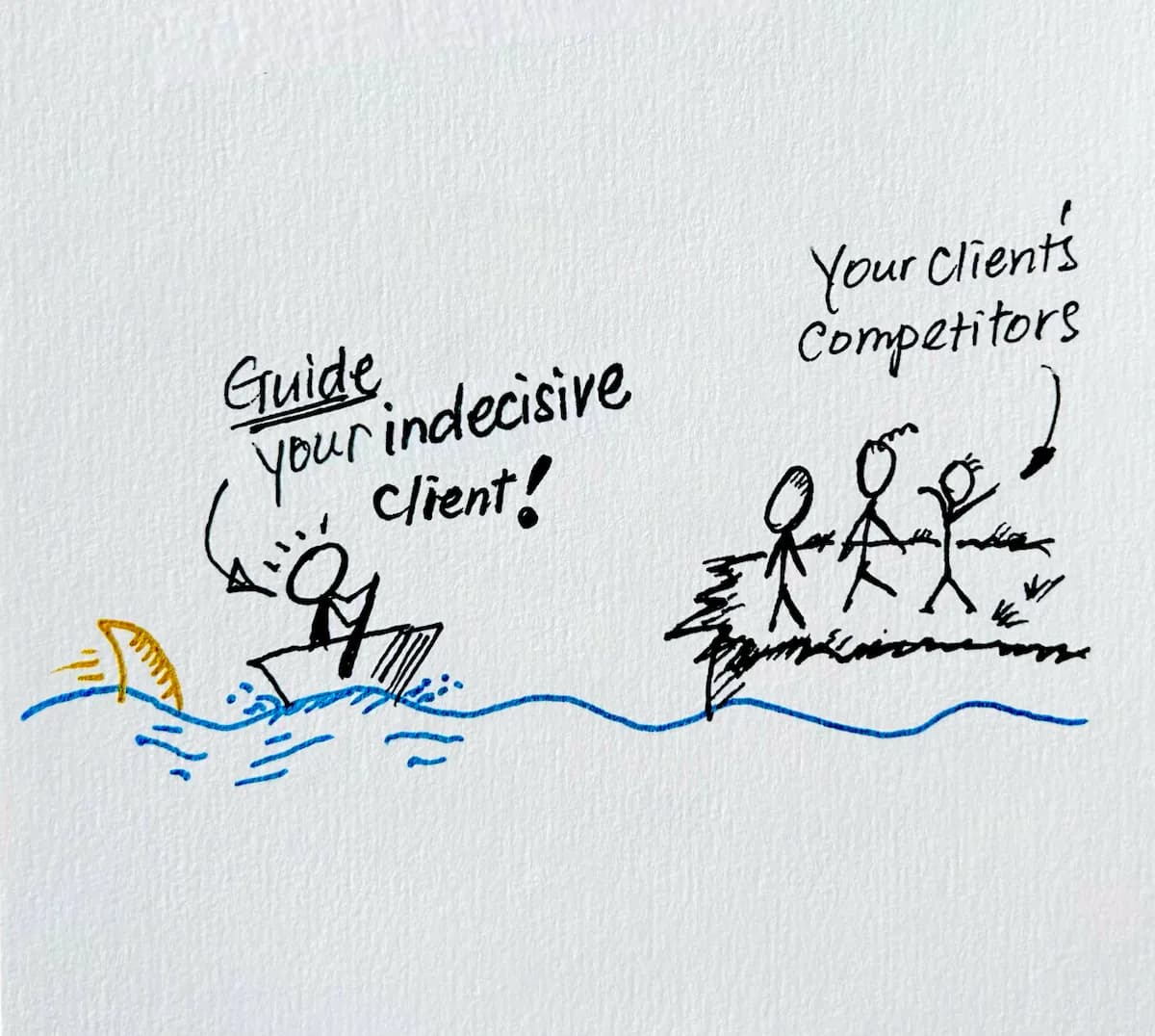
The Systemic Advantage: This is why sharing team intelligence within a centralized system is so critical. It allows you to leverage collective insights without compromising client confidentiality.
2. Has the Client Had a Bad Experience?
It is common for clients to have been burned by overcommitted vendors. Do not promise "too-good-to-be-true" outcomes.
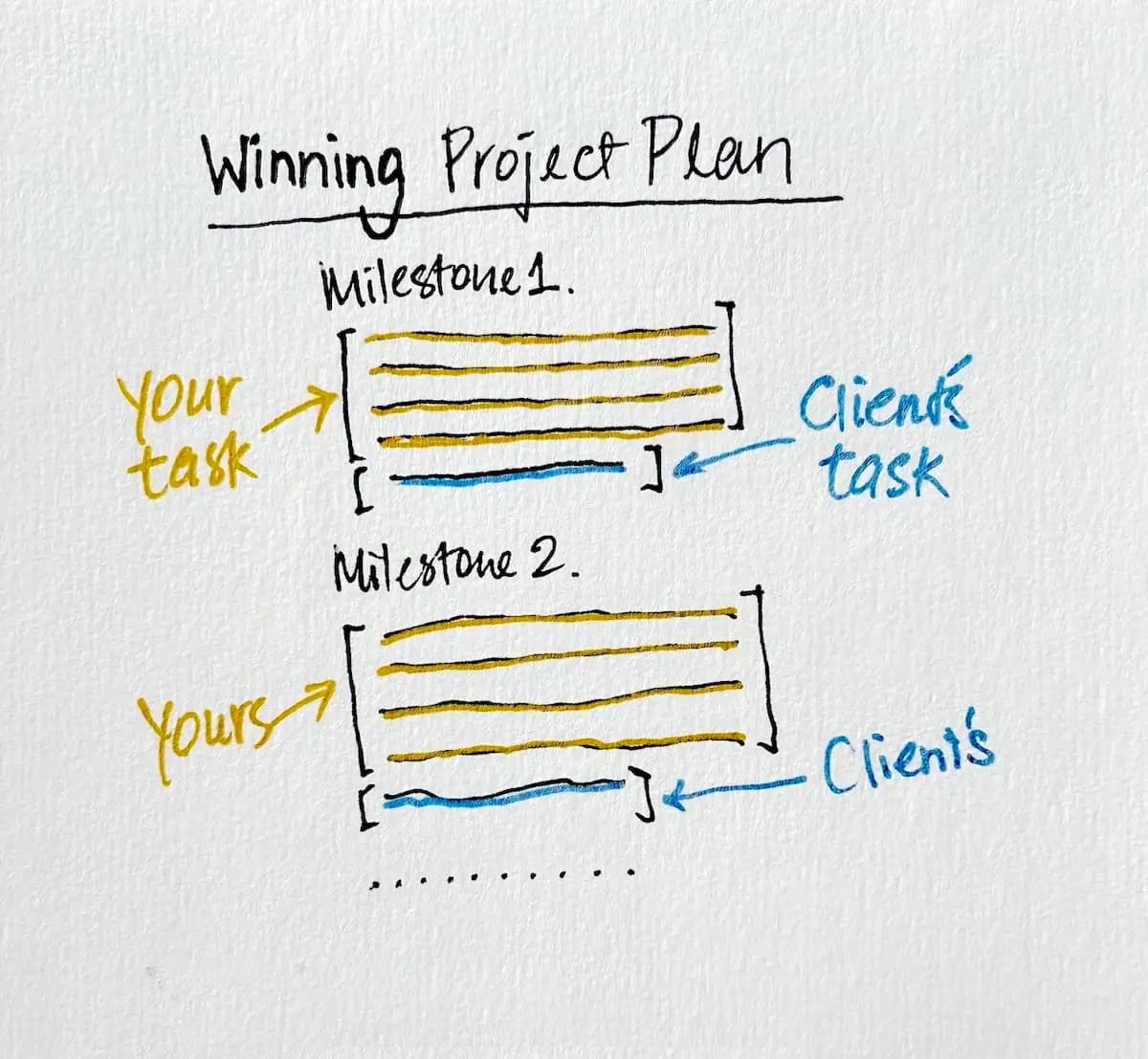
Strategy: In your proposal, invest time in explaining the implementation steps. Strategically plan "easy tasks" for the client — such as providing specific data or signing off on a test plan at each milestone.
Why it works: This makes the client an active approver at every stage. They feel in control because they have a clear picture of the project before they sign. It also forces the client to get involved in the critical steps.
Ping them for feedback and listen to what they share. Ensure they understand every part of the project. Emphasize that your team guides the process to ensure success. This de-risks their buying decision.
This also reminds your project team to get the client involved in major steps. By doing so, you gain their trust and give them confidence compared to those who have never gone through such a discussion strategically.
Fear comes from fog; clarity gives confidence.
- Leverage even more: Encourage them to involve other colleagues (e.g., system managers, database admins) or bosses (e.g., CTOs/technical directors) early. Help them gain internal support. This is how you build a multi-level footprint.
- Point to note: Do not overwhelm or scare them. If the process looks too raw or difficult, they will assume your solution is a burden rather than a benefit.
The Systemic Advantage: An AI system could learn from your "Role Model" proposal winning in such a way, and help develop a similar project that replicates the success.
3. Identify Their KPI for the Year
Every stakeholder has a personal stake in the project. They want a promotion, a salary increase, or simply job security. If they are the right person, your solution must help them hit their specific KPI.
To understand their true motivation, you must identify their company culture: is it a "Bonus" system or a "Deduction" system?
Type A — Bonus Culture: The company rewards innovation and value creation. Management encourages staff to take on new responsibilities to drive growth.
- Your Strategy: Don't just sell "protection." Sell how your solution generates revenue, builds confidence with their clients, and creates new business opportunities. Make your security solution a revenue-generating asset.
Type B — Deduction Culture: The company rewards stability and strict adherence to procedure. Innovation is risky; if something breaks, the staff is penalized.
- Your Strategy: Don't sell "innovation." Sell reliability and manageability. Focus on how your solution meets the CIA triad (Confidentiality, Integrity, Availability) and how it reduces the long-term risk of their legacy system failing.
- The "Shared Responsibility" Pivot: In a deduction-heavy culture, your contact is terrified of being the "single point of failure." Do not let them bear the responsibility alone.
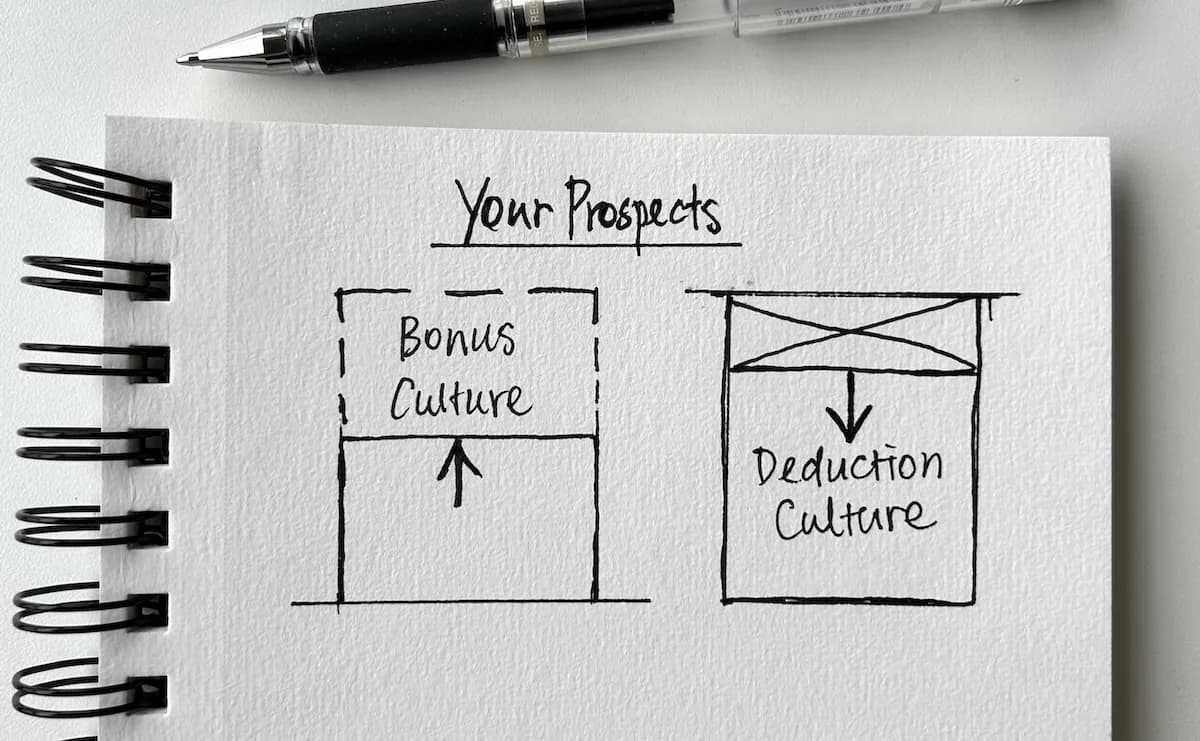
The Reality: Most companies are a mix of both, but one culture usually dominates the decision-making process.
The "Architect's" Move: Once you identify the dominant culture, you can de-risk the project for them. Encourage your contact to involve other colleagues or bosses early. Frame this as a "Team Mission for Success", where their success is defined differently as mentioned in Type A or B above. Your contact will be willing to facilitate this "team approach" because you move the project from an "individual risk" to a "team objective."
Point to note: You may have a long list of benefits, but you must narrow your focus. Emphasize only the value that addresses their specific KPI. If you don't know what they are measured on, you are just guessing.
Once you understand your target thoroughly, you are 80% knowing what to do. But I still want to remind you to consider the following about your action.
(B) About You: The Proposal Architecture
After mapping the client's situation, put yourself in their shoes. Is your proposal compelling? Does it solve their specific pain?
1. Quantify the Value
Your solution must address their specific pain point. If you aren't using the 3D Qualifier (HP Lesson 2), go back and refine it.
The Value Equation: 99% of value comes down to two drivers:
- Revenue Growth — for "Bonus Culture" entities
- Cost Reduction / Risk Mitigation — for "Deduction Culture" entities
The "Builder's" Edge: In my database encryption project, I didn't just sell "security." I quantified the potential loss from a security breach versus the cost of my solution. I framed the solution as a way to avoid a massive financial penalty.
2. Detail the Implementation (The "Client-First" Angle)
Never send a proposal without a face-to-face walkthrough.
- Address the "What Ifs": Did they raise concerns during your meetings? Digest your notes. Create an explicit Q&A section in your proposal that addresses every concern they raised, pointing them directly to the relevant section.
- Service Level: Be specific about your support. Do you offer 24/7 monitoring? What is the hardware replacement policy? What is the "fallback" plan if things go wrong?
- Project Management: Use a Gantt chart to show the task breakdown. Emphasize that your team handles 80–90% of the heavy lifting, while the client only needs to provide 10–20% support. This de-risks the "Fear of Starting" by showing them exactly how much effort is required.
- The Hook: "This is our first draft. Let us brief you in 30 minutes so you don't have to spend hours reading it. We can answer your questions directly and effectively."
- The Logic: Positioning a face-to-face briefing as a "time-saver" is how you build trust.
Point to note: Leave the pricing discussion for a later stage. We will cover that in a future "Silence Trap" reason.
3. The Last Resort: Strategic Escalation
If your contact goes silent without explanation, or even gives you a hard time, assume a competitor has gained traction. You need to take a calculated risk to save the deal.
The Strategy: If the opportunity is high-value, send a "Risk Report" directly to the client's management. This is not a cold outreach; this is a high-level diagnostic report based on the discovery you have already completed.
- The Message: "I know you are currently evaluating [Project]. My team has put together a risk analysis of your current system based on our findings. I'd like to invite you to a brief session to discuss these risks and how we can add value to your [Department/Goal]."
- The Mindset: Be positive and confident. Do not let your ego get in the way. You are providing a service by highlighting a risk they might be missing.
Important Considerations:
- Verify your qualification: Only do this if you have already completed your 3D Qualifier (Demand, Dollars, Dynamics). This is not a cold reach-out; it is a strategic intervention for a qualified opportunity.
- Internal Alignment: Always alert your manager before escalating. If possible, have your manager send the report from their account. This adds weight to the message and protects your relationship with your primary contact.
- The "Nice" Pivot: If your original contact asks why you escalated, have a professional explanation ready. Frame it as a "standard executive review" to ensure the project's success, not as a lack of trust in them.
How SignalLeading Generates Winning Proposals to Beat the "Fear to Start"
We don't just sell a product; we architect a path to solve the client's pain. To beat the "Fear to Start," we must engineer the implementation to be low-risk and high-reward.
SignalLeading automates this by mapping your most successful "Win-Patterns" directly onto the prospect's specific account context. Instead of a static document, the system generates a Dynamic Roadmap that pre-fills milestones, safety labels, and stakeholder roles to de-risk the project from day one.
I've documented the full technical logic, including the RAG orchestration and schema mapping, in my latest SalesOS blueprint.
Read the full technical breakdown: The Win-Pattern Engine →
Final Thoughts: The Architect's Mindset
Enterprise sales is not about "closing." It's about de-risking the decision.
If your prospect is silent, they aren't "ghosting" you — they are stuck in a "Silence Trap" caused by the fear of starting. Your job is to provide the clarity that turns that fear into confidence.
- Prove the Value: Emphasize the gain of your solution versus the loss of their legacy system.
- Commitment: Prove you are a solution partner, not just a vendor. Your strength lies in your solution and your service level.
- The "Systemic" Advantage: Use your SalesOS to replicate the "Role Model" proposals that have won in the past.
Fear comes from fog; clarity gives confidence.
Be the Architect who clears the fog, and the signature will follow.
Ready to Architect Your Pipeline?
I do not sell "sales tools." I architect GTM systems that turn stalled enterprise deals into predictable revenue.
If you are a Founder or GTM Leader tired of "firefighting" and ready to build a system that actually scales, let's talk.
If you have a high-stakes pipeline with recurring "Silence Traps," or would like to audit your existing sales pipeline system with the SignalLeading SalesOS framework, I would like to show you how we can re-engineer your deal flow.